
Key takeaways
The bond tailwind has ended
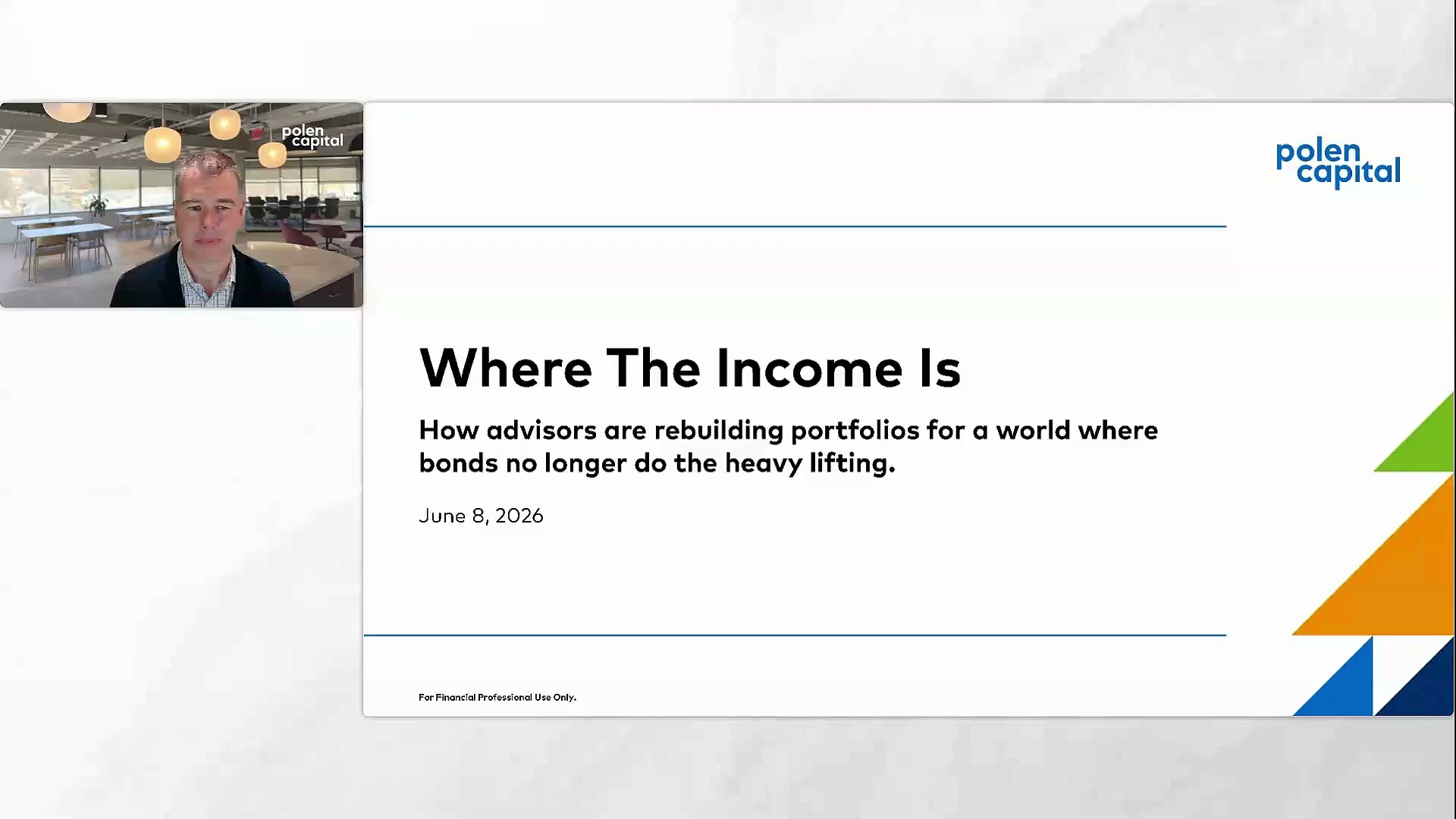
Declining rates made 60/40 portfolios self-correcting for roughly four decades. That tailwind no longer holds, so income portfolios require deliberate construction.
Diversify income sources
Fixed-rate high yield, floating-rate leveraged loans, and dividend equities respond differently to interest rate changes, adding resilience to income allocations.
Quality over yield
A quality-first lens applies across high yield bonds, secured leveraged loans, and dividend equities. Over half the high yield market is now BB-rated.
Global dividend equities
International dividend stocks may offer higher starting yields, a different sector mix, and a potential hedge against U.S. dollar weakness.
Topics discussed
Rebuilding the Income Portfolio
How advisors are sourcing durable income across dividend equities, high yield credit, leveraged loans, and private credit structures.
High Yield vs. Leveraged Loans
Fixed-rate bonds with moderate duration compared to floating-rate loans with near-zero duration and their roles in an income allocation.
International Dividends
Higher starting yields, different sector composition, and currency diversification from non-U.S. dividend equities.
Private Credit Access
How interval funds provide non-accredited investors access to private credit opportunities with periodic quarterly liquidity.
Questions from the webinar
Why does the 60/40 portfolio no longer reliably produce income?
In 2022 both stocks and bonds fell simultaneously, breaking the historical negative correlation that made 60/40 self-correcting. Without the rate-decline tailwind, income must be built deliberately across multiple sources.
How do high yield bonds differ from leveraged loans?
High yield bonds are fixed-rate instruments with moderate duration, while leveraged loans are floating-rate with near-zero duration. This creates different sensitivities to interest rate changes, making them complementary in an income portfolio.
Is today's high yield market as risky as its 'junk bond' reputation suggests?
The market’s quality composition has improved significantly. Over half of the high yield market is now rated BB, and default rates remain historically contained among higher-quality issuers.
What is an interval fund?
An interval fund is an SEC-registered fund that offers periodic liquidity through quarterly repurchase windows, providing investors access to less liquid private credit strategies without requiring accredited investor status.
Get webinar invites and insights.
Be the first to know about upcoming webinars and new research.