

Key takeaways
- We believe we have entered a new paradigm whereby change will increasingly be defined in non-linear terms. AI is a general-purpose technology that may compress product cycles, lower the cost of innovation, and accelerate competition.
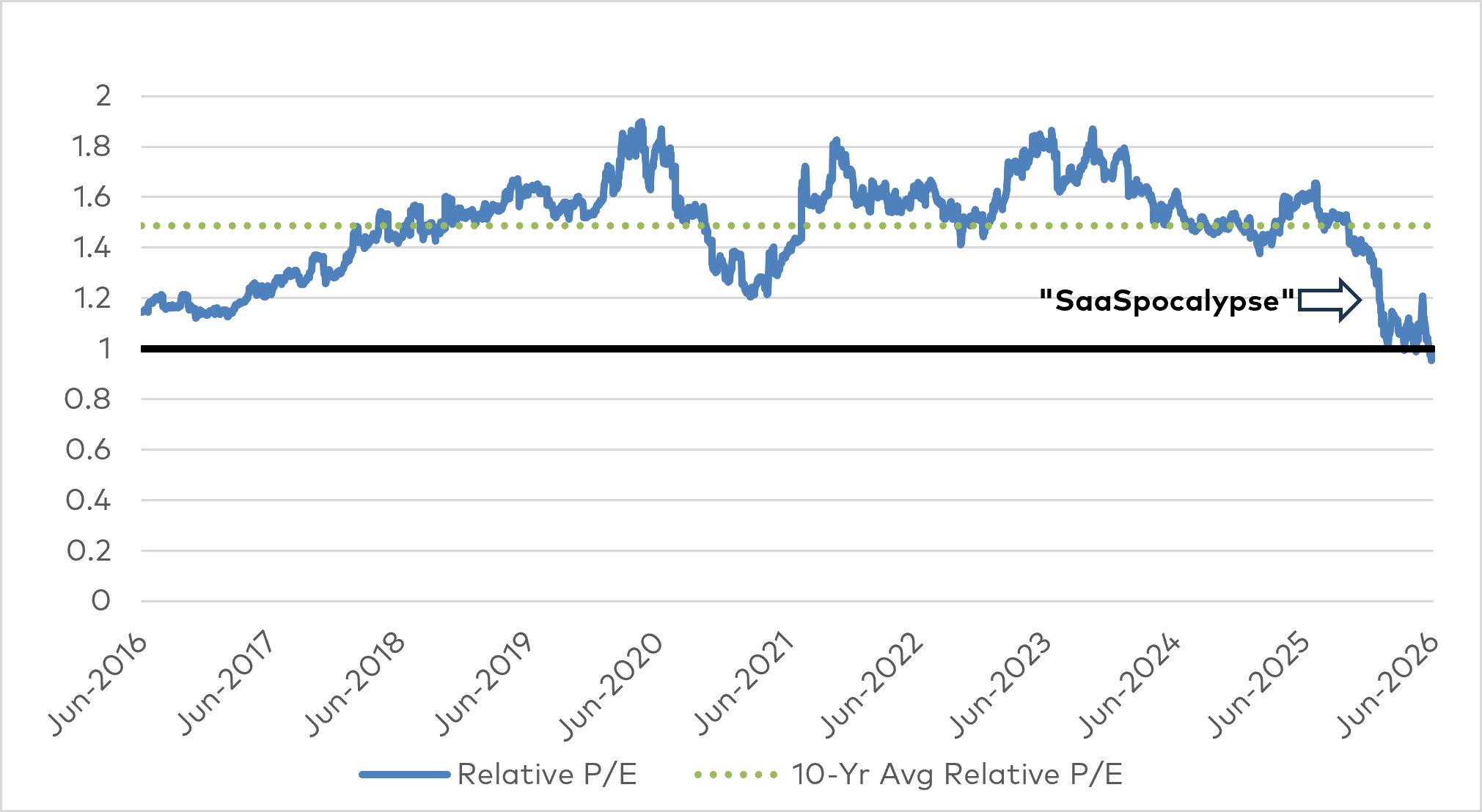
- We believe AI may be compressing both the duration of competitive advantages and introducing more uncertainty around that duration — as the software sector's recent "SaaSpocolypse" illustrates.
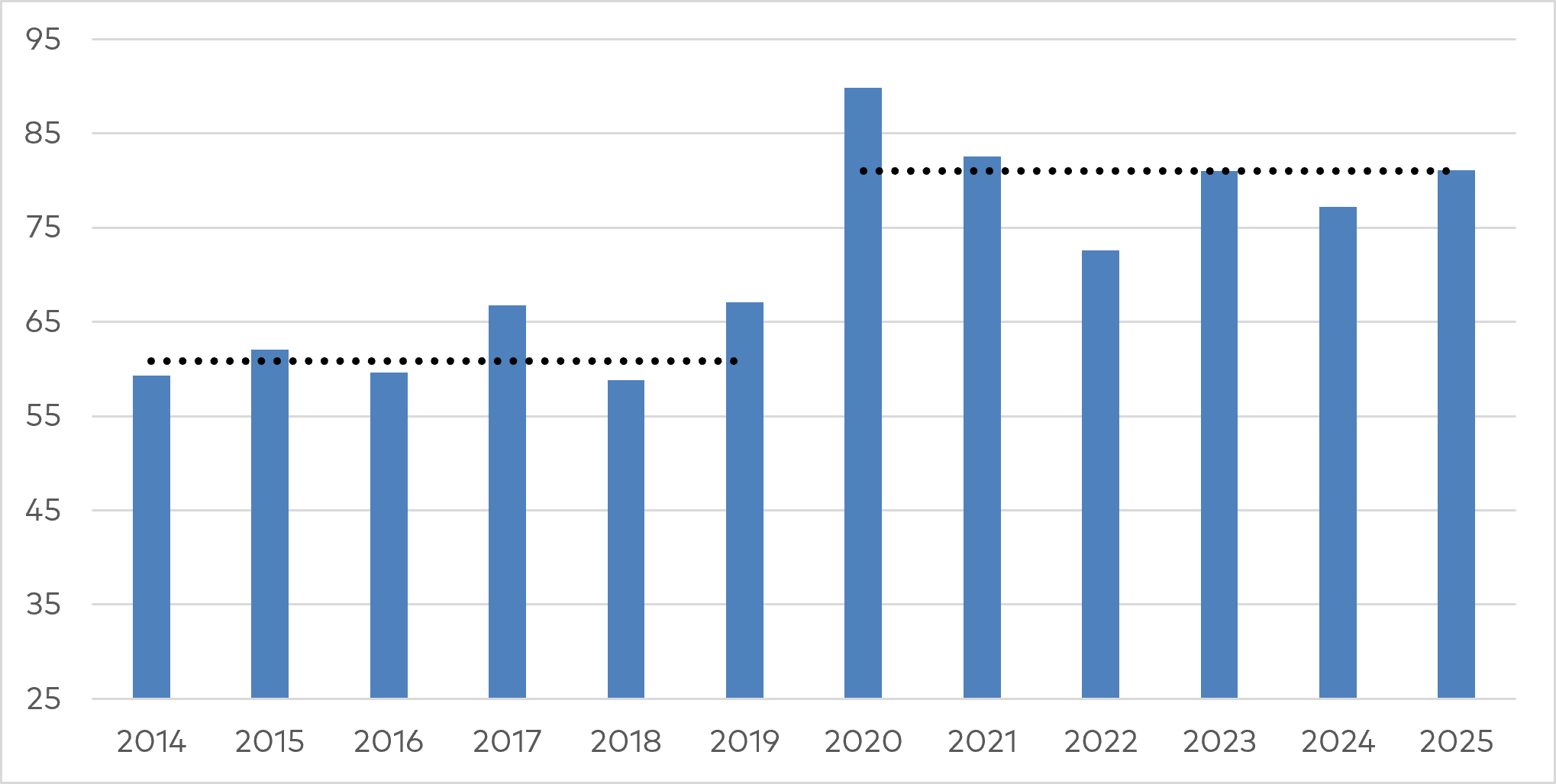
- With median return dispersion between top- and bottom-decile stocks in the Russell 1000 rising from 60% to over 80% post-COVID (see Figure 3), we believe the cost of patience is rising. Polen Capital's 5Perspectives framework seeks to combine rigorous bottom-up fundamental analysis with thematic and technical disciplines to provide what we believe is a critical element of investing today — timeliness.
Change is now non-linear
For most of modern investing, the pace of change has been remarkably stable. Industries evolved incrementally. Business models matured. Competitive advantages emerged slowly and, in most cases, eroded slowly. As a result, investors could afford to think in years and decades because the competitive landscape generally moved at that speed.
Artificial intelligence seems to be changing that equation. AI is a general-purpose technology that compresses product development cycles, lowers the cost of innovation, accelerates competition, and enables entirely new business models to emerge very quickly. ChatGPT was able to scale from 0 to 100M users in two months — a staggering feat that took years if not decades for other digital platforms.
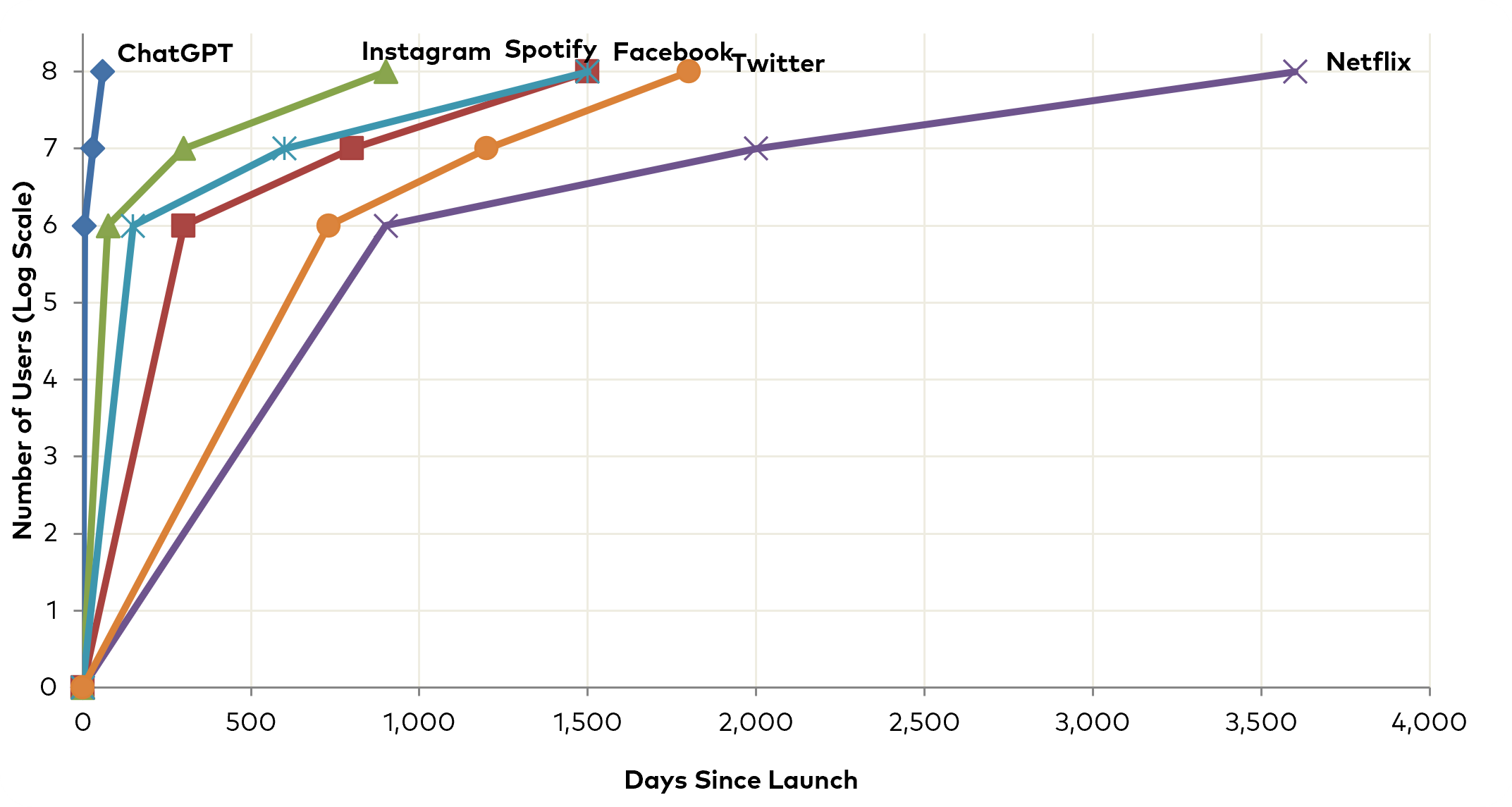
We believe we have entered a new paradigm whereby change will increasingly be defined in non-linear terms. For investors, this distinction matters enormously.
AI may be compressing the duration of competitive advantages
Prominent financial researcher and strategist Michael Mauboussin has argued that the value of a business depends not only on the magnitude of excess returns (earning more than its cost of capital), but also on the duration of those returns — which he refers to as the "Competitive Advantage Period." Businesses capable of sustaining returns above their cost of capital for longer periods deserve higher valuations because investors can capitalize those excess returns further into the future.
We are not suggesting that competitive advantages have been rendered worthless. Rather, we believe artificial intelligence may be compressing both the duration of those advantages and introducing more uncertainty around that duration.
"Our observation is not whether software moats have permanently weakened, but rather how rapidly markets revised their expectations for the durability of those moats."
— Polen Capital 5Perspectives Growth Team, Investing at the Speed of Change
In our view, the software industry in early 2026 provides a clear example. For much of the past decade, the software industry has generally represented the archetype of competitively advantaged businesses — capital-light, recurring revenue, high margins, and long runways for growth. Then, over the course of a few weeks in late January/early February 2026, the market discounted the agentic AI threat, questioning whether it fundamentally altered the economics of software development.
The Increasing Value of Adaptability
If competitive advantages become less durable on average — or if markets simply become faster at discounting changes in durability — then we believe another characteristic becomes increasingly valuable: adaptability.
For companies, we define adaptability as the willingness and ability for reinvention before circumstances impose change. Netflix willingly disrupted its own DVD-by-mail business. Amazon repeatedly sacrificed near-term profits to build entirely new businesses. Microsoft shifted from perpetual software licenses to cloud subscriptions despite the risk of cannibalizing its existing franchise.
In our view, the same principle applies to investors. In the 6 years preceding COVID (a line of demarcation starting with digital transformation and in recent years, AI), the median dispersion between the top and bottom decile of returns in the Russell 1000 index was 60%. In the 6 years thereafter, the median dispersion ratcheted up to over 80%. It appears the cost of being patient is rising with the accelerating pace of change.
Five perspectives for a faster-moving market
Adaptability should not be confused with constantly reacting to headlines. In our view, changing one's mind only adds value when it is grounded in a disciplined, repeatable framework.
Polen Capital's 5Perspectives Growth Assessment framework combines rigorous bottom-up fundamental analysis with two additional disciplines in an effort to improve responsiveness to changing markets: a thematic discipline and a technical discipline. These disciplines provide what we believe is a critical element of investing today — timeliness.
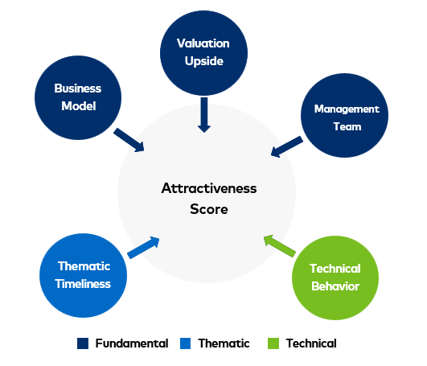
Like most investors, we seek businesses with an appealing combination of economics, exceptional management teams, and reasonable valuations. However, we also recognize that powerful thematic forces — many of which sit outside a company's control — can become significant drivers of returns for extended periods. Likewise, technical behavior often reflects changing expectations before those changes become fully visible in company fundamentals.
Together, we believe these disciplines introduce healthy tensions into the investment process. They help us become more constructive when tailwinds strengthen, while encouraging us to reassess positions when investor psychology begins to deteriorate or themes lose momentum.
Download the complete paper
Download the full paper for Polen Capital's closing thoughts on how thematic and technical disciplines may help investors assess and navigate a changing market environment.
Download full paper (PDF)The views expressed reflect those of Polen Capital as of the date of this publication and are subject to change without notice. There is no assurance that the 5Perspectives Growth Team will be able to implement its investment strategy or invest in companies with the characteristics described. There can be no guarantee that any investment strategy will achieve its objectives. Past performance is not indicative of future results.
Get insights from the team.
Receive commentaries, perspectives, and research from this investment team directly in your inbox.